
How to Learn Arabic Alphabet Step by Step: A Practical Beginner’s Guide
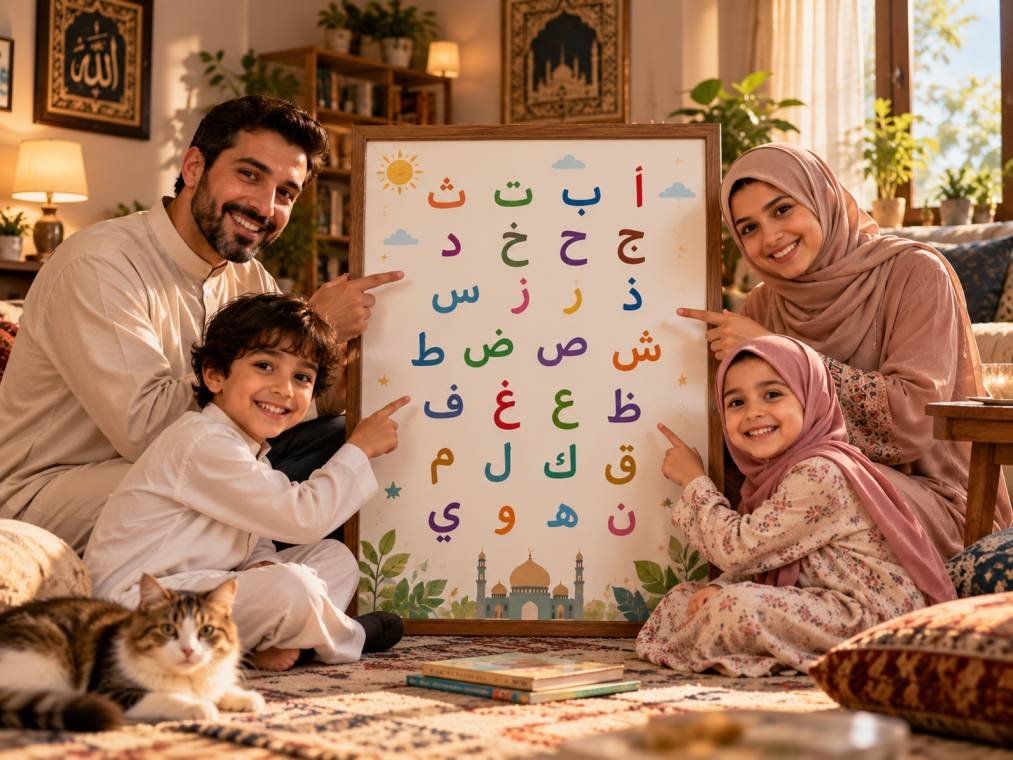
Learning the Arabic alphabet can feel simple at first: your child recognizes a few letters, repeats their names, and seems ready to read. But then those same letters appear inside a word, and suddenly everything feels difficult.
This is where many beginners get stuck. Knowing the names of Arabic letters is not the same as being able to read Arabic. A learner also needs to recognize changing letter shapes, pronounce the sounds, understand vowel marks, and join sounds together without guessing.
At Quran Home, we teach this foundation through HICR (How I Can Read?), our structured 12-unit Arabic reading program. Each unit has its own learning goals, and students move forward according to their ability—not because a calendar says they should. Here is a step-by-step explanation of the learning path, with examples and activities you can use at home.
What Should You Learn Before Trying to Read Arabic Words?
Arabic has 28 basic letters and is written from right to left. Unlike English, most Arabic letters connect within words, and their shapes can change depending on their position. Short vowel sounds are often shown with small marks above or below the letters.
The 28 letters are:
- ا
- ب
- ت
- ث
- ج
- ح
- خ
- د
- ذ
- ر
- ز
- س
- ش
- ص
- ض
- ط
- ظ
- ع
- غ
- ف
- ق
- ك
- ل
- م
- ن
- ه
- و
- ي
Learn the letter’s sound as well as its name
For example, ب is called bāʾ, but the sound you need when blending a word is /b/. A beginner should be able to see the letter, say its sound accurately, and recognize it again in a different position. Some Arabic sounds, such as ح, ع, and ق, may need careful listening and feedback from a qualified teacher. For simple practice ideas, see our guide to pronouncing Arabic letters at home.
Notice the dots and changing shapes
The letters ب, ت, and ث share a similar basic shape, but their dots make them different letters. Many letters also have isolated, beginning, middle, and end forms. The letter ب, for example, may appear as ب, بـ, ـبـ, or ـب. Six letters—ا, د, ذ, ر, ز, and و—do not connect to the letter that follows them.
You do not need to master every rule in one sitting. First become familiar with the letters; then build the reading skills that make those letters useful.
How to Learn Arabic Alphabet Step by Step: The 12-Unit HICR Method
A useful Arabic reading plan moves from recognizing individual letters to decoding short syllables, then words, and eventually Quranic text. Our HICR program follows that progression in 12 units. Some units have several levels so a learner can practice a skill thoroughly before moving on. The same path works for grown-ups, too; if you are the one starting out, read our guide to learning to read Arabic as an adult.
Step 1: Recognize and pronounce the Arabic letters
Start with the letters themselves. Learn to recognize their shapes, identify the dots, and hear the correct sound. Practice letters on their own before expecting a child to recognize them quickly inside words.
Try this: show ب, ت, and ث in different orders. Ask the learner to point to the letter you name, then say its sound. Mix in a few previously learned letters rather than reviewing only one group.
Step 2: Add the short vowels (Harakat)
Harakat tell us which short vowel follows a consonant. The three foundational marks are fathah (ـَ), kasrah (ـِ), and dammah (ـُ). With the letter ب, they make بَ (ba), بِ (bi), and بُ (bu).
- بَbafathah, above the letter
- بِbikasrah, below the letter
- بُbudammah, above the letter
This is an important shift. Instead of reciting letter names, the learner starts reading what is actually written. Ask them to read the same letter with changing vowel marks until the response becomes natural.
Step 3: Build three-letter words, then five-letter words
Once letter sounds and short vowels are familiar, students begin joining sounds to read three-letter words and then longer five-letter words. For example, كَتَبَ (kataba, “he wrote”) has three written letters, each with a short vowel.
The goal is not to memorize a list of words. It is to look at unfamiliar combinations, identify each letter and mark, and blend the sounds in order. Teachers choose longer exercises that match the rules the student has already learned.
Step 4: Learn lengthening with Alif (five levels)
Next comes the long ā sound, often formed with alif. Compare بَ (ba) with بَا (bā): the second lasts longer. In HICR, lengthening with Alif is taught across five levels of practice rather than treated as a one-minute rule.
Have the learner listen carefully to the difference between short and long sounds. A good exercise is to alternate the two and ask which sound was longer before reading it aloud.
Step 5: Learn lengthening with Yaa (three levels)
Yaa can be used to make the long ī sound. Compare بِ (bi) with بِي (bī). HICR includes three levels of practice for this skill, helping students recognize and produce the longer sound as they read.
Step 6: Learn lengthening with Waw (three levels)
Waw can be used for the long ū sound. Compare بُ (bu) with بُو (bū). This unit also has three levels. By now, students are learning to distinguish the three common long-vowel patterns instead of stretching every vowel at random. For a full lesson with teacher videos and a short practice test, see our complete guide to long and short Arabic vowels.
| Lengthening letter | Short sound | Long sound |
|---|---|---|
| Alif | بَ ba | بَا bā |
| Yaa | بِ bi | بِي bī |
| Waw | بُ bu | بُو bū |
Step 7: Practice Damma
Damma (ـُ) is the short “u” vowel mark written above an Arabic letter. Although students first meet it with the Harakat, HICR gives Damma a dedicated unit before moving on to Sukoon. For practice, compare بُ (bu), بَ (ba), and بِ (bi). Ask the learner to read each sound from its mark rather than guess from the letter alone.
Step 8: Read letters with Sukoon
Sukoon (ـْ) indicates that a consonant has no following short vowel. In the word مِنْ (min, “from”), the نْ ends without an extra a, i, or u sound. This can be surprisingly tricky for beginners who are used to adding a vowel after every letter.
HICR treats Sukoon as an advanced reading skill. The teacher checks that the student can blend the sounds smoothly rather than inserting an extra vowel.
Step 9: Read Shaddah with Fathah
Shaddah (ـّ) marks a doubled consonant. In رَبَّ (rabba), the بّ is held or articulated as a doubled consonant, with fathah. It is not simply the same as saying one بَ. Practice hearing the difference first, then reading it.
Step 10: Read Shaddah with Kasrah
Next, learners apply the same idea with kasrah, as in رَبِّ (rabbi). Separating these combinations into units helps teachers see whether a student truly understands the mark, rather than just repeating a familiar example.
Step 11: Understand Tanween
Tanween is an ending mark that adds an n sound when read in connected pronunciation. For example, كِتَابٌ may be read kitābun when continuing the phrase. Learners practice the different tanween marks and learn to recognize them while reading. Reading at a pause can follow different rules, which a teacher can introduce at the appropriate stage.
Step 12: Learn Hamzat and begin reading from the Quran
In the final HICR unit, students work with hamza and its written forms, such as أ, إ, ؤ, ئ, and ء. They then use what they have learned to read from the Quran, supported by the program’s “Read and Learn” activities.
This step connects isolated skills to meaningful reading. It does not mean a beginner has automatically mastered every Tajweed rule. Reading Arabic accurately provides the foundation; developing beautiful, correct Quran recitation remains a continuing learning process.
Watch the lesson
How to Teach Your Child 4 & 5 Arabic Letter Words
How We Make the First Arabic Lessons Enjoyable
A good beginner lesson should not feel like a test that the child is afraid to fail. At Quran Home, our teachers use storytelling and gamification to encourage participation. A letter can become part of a short story, a visual activity, or a simple challenge rather than another symbol to repeat twenty times.
In one real classroom video, a Quran Home teacher introduces Alif and supports a student while reading a word. The important idea is the interaction: the student is guided to recognize, try, listen, and try again, with help rather than pressure.
Teachers also give students enjoyable homework after each class. Quran Home students can use the academy’s own educational resources, including letter-drawing activities and exercises that reinforce what was learned in the lesson.
A Real Student Story: Why We Went Back to the Foundation
One student came to Quran Home after about a year and a half of struggling with Quran reading. His family was frustrated and worried that he might never be able to read the Quran confidently. More recitation practice had not solved the underlying difficulty.
Our response was to stop pushing straight into Quran reading and rebuild his Arabic reading foundation through HICR. The student started working through the skills he needed, in an order he could manage.
According to our teaching experience with this student, his reading began improving within the first month. By around three months, he was reading Quran smoothly and reciting with Tajweed. That was one learner’s outcome, not a guaranteed timetable for every child.
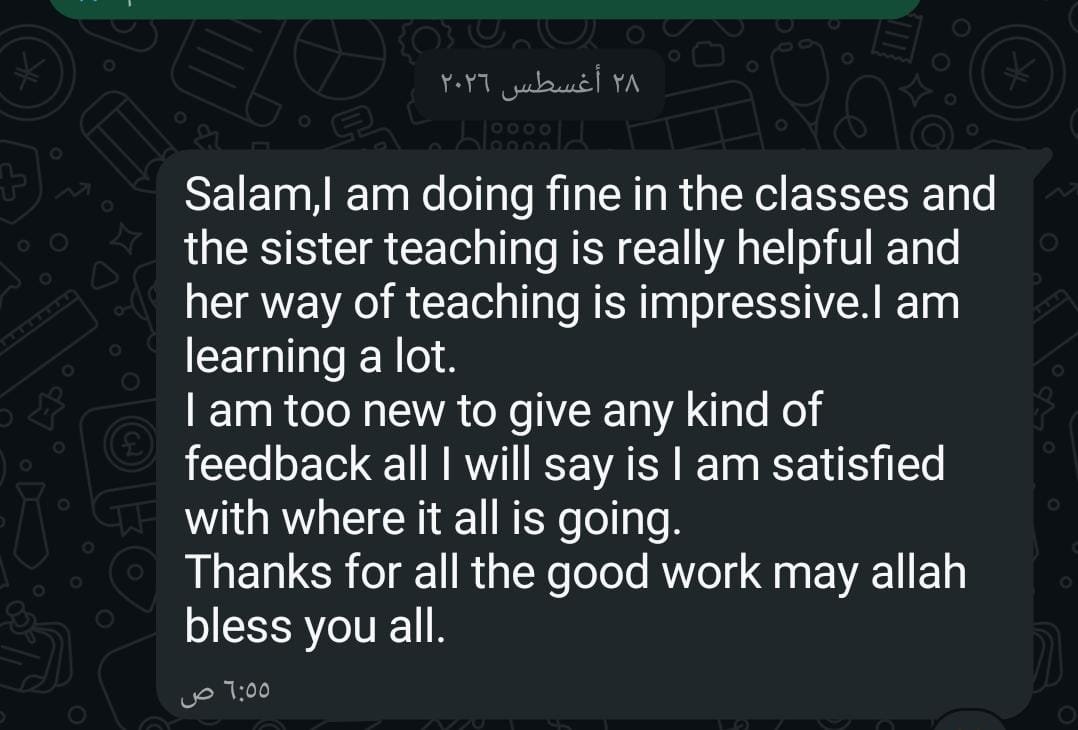
What matters most about this story is not the speed. It is the decision to identify the missing skill instead of repeating the same difficult task. In separate feedback, a Quran Home learner described their teacher as helpful and said they were learning a lot—a welcome reminder that feeling supported matters, too.
How to Practice the Arabic Alphabet at Home
You do not need to turn your home into another classroom. Short, consistent practice that builds on the latest lesson is usually more manageable than pushing through a long session when a child is tired.
Here is a simple 10-minute practice routine you can adapt to your child’s age and attention span:
- 2 minutesRevisit three or four familiar letters and say their sounds.
- 3 minutesRead letters with fathah, kasrah, and dammah, or review the skill currently being taught.
- 3 minutesBlend short syllables or words chosen from the student’s current level.
- 2 minutesDraw a letter, play a quick matching game, or listen to a short piece of clear Arabic.
Use the exercises your teacher assigns, because they should match the learner’s current unit. At Quran Home, supervisors also follow students’ progress and provide additional support when needed.
Keep Arabic sounds familiar outside class
One piece of advice we often give parents is to let children hear Arabic regularly. Age-appropriate stories, clear Arabic audio, and Quran recitation can help children become more familiar with the language’s rhythm and sounds. Listening supports reading practice, but it does not replace learning to identify the written letters and vowel marks.
Four Mistakes Parents Should Avoid
1. Rushing to see results
The biggest mistake, in our experience, is expecting fast results before the foundation is secure. A child who can recite one memorized passage is not necessarily ready to decode a new Arabic word. Praise the small skills that make independent reading possible.
2. Expecting every child to follow the same timetable
In HICR, we progress through units according to each student’s speed and learning capability. If a learner needs more time with Harakat or lengthening, that is information for the teacher—not a reason to rush them.
3. Starting independent Quran reading before Arabic decoding is ready
Our advice is not to force a student into independent Quran reading before the basics are strong. Otherwise, the same reading mistakes may be repeated, the student may become discouraged, and teachers may need to rebuild skills later. A child can still listen to Quran and memorize with guidance while learning the alphabet; those activities simply serve a different purpose.
4. Limiting Arabic to the lesson itself
A few enjoyable minutes of Arabic listening or letter practice outside class can make the next lesson feel more familiar. Keep the mood positive. If practice becomes a daily argument, shorten it and speak with the teacher about a better approach.
How Do You Know When a Beginner Is Ready to Read from the Quran?
Before expecting independent Quran reading, check whether the learner can do these things with unfamiliar examples, not just memorized ones:
- Recognize Arabic letters in different positions and pronounce them accurately.
- Read consonants with the three Harakat without guessing.
- Blend letters into short and longer words.
- Distinguish short vowels from long Alif, Yaa, and Waw sounds.
- Read Sukoon, Shaddah, Tanween, and Hamza at the level already taught.
- Accept corrections and read a short, appropriately selected passage without becoming overwhelmed.
A teacher should assess the whole reading process before deciding which Quran text and Tajweed rules to introduce next.
Frequently Asked Questions
How long does it take to learn the Arabic alphabet?
There is no single number that fits every beginner. Recognizing 28 letters is only the first milestone; joining letters, reading vowel marks, and decoding unfamiliar words takes additional practice. A structured curriculum and regular feedback make progress easier to track.
Should I learn the Arabic letter names or sounds first?
Learn both, but make sure the learner can use each letter’s sound in reading. Knowing that ب is called bāʾ is useful; knowing how بِ or بُ sounds is what helps a learner decode a word.
Can children start memorizing Quran before they can read Arabic?
Yes. Listening and guided memorization can take place alongside Arabic literacy lessons. But reciting from memory and reading new Quranic text are different skills, so a student still needs a reading foundation.
Can I teach the Arabic alphabet at home?
Parents can help enormously with repetition, games, letter drawing, and listening. For sounds that do not exist in English, or if a child continues to struggle with decoding, guidance from a qualified Arabic teacher can prevent mistakes from becoming habits.
What if my child has already studied Arabic for months but still cannot read?
Do not assume the child is incapable. Ask for a skills-based assessment: Can they recognize letters in connected forms? Read Harakat? Blend unfamiliar syllables? Distinguish long vowels? The problem may be one missing foundation rather than the whole subject.
Start with Strong Arabic Reading Skills
If you want to learn the Arabic alphabet step by step—or help your child do it—the goal is not to race through 28 letters. It is to move from recognizing shapes to reading actual Arabic confidently, one skill at a time.
That belief is why we built HICR at Quran Home, and it sits at the center of our reading-first methodology. If you are unsure where a learner should begin, explore our Arabic Reading Foundation course or request a free evaluation. A good starting point is the one that matches what the student can read today.
Pingback: Pronouncing Arabic Letters at Home: A Simple Practice Guide for Beginners - quranhomehub.com
Pingback: Arabic Alphabet Chart PDF – Free Download - quranhomehub.com